
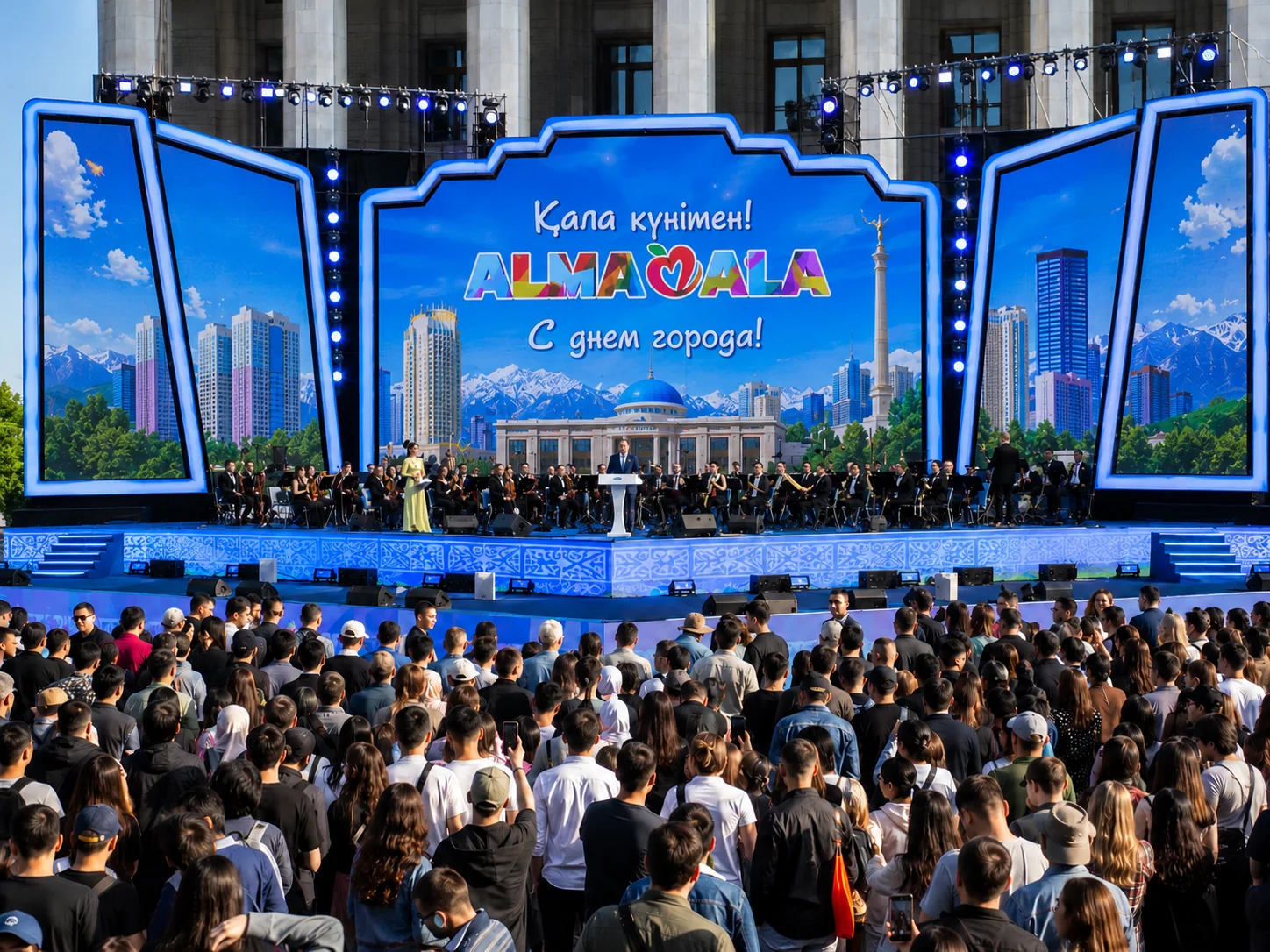
City festival
Almaty City Day
Large open-air stage, mass audience, wide coverage and operation within city infrastructure.
FESTIVAL PRODUCTION · ALMATY
We design the festival site as one live infrastructure: stages, site-wide audio, lighting, LED, power, backstage, people flows and the technical crew operate from one production plan.
VISUAL OVERVIEW
Stage, audience, content, power, safety, logistics and dozens of specialists operate at the same time. A visual system makes the whole production clear.
Large open-air stage, mass audience, wide coverage and operation within city infrastructure.
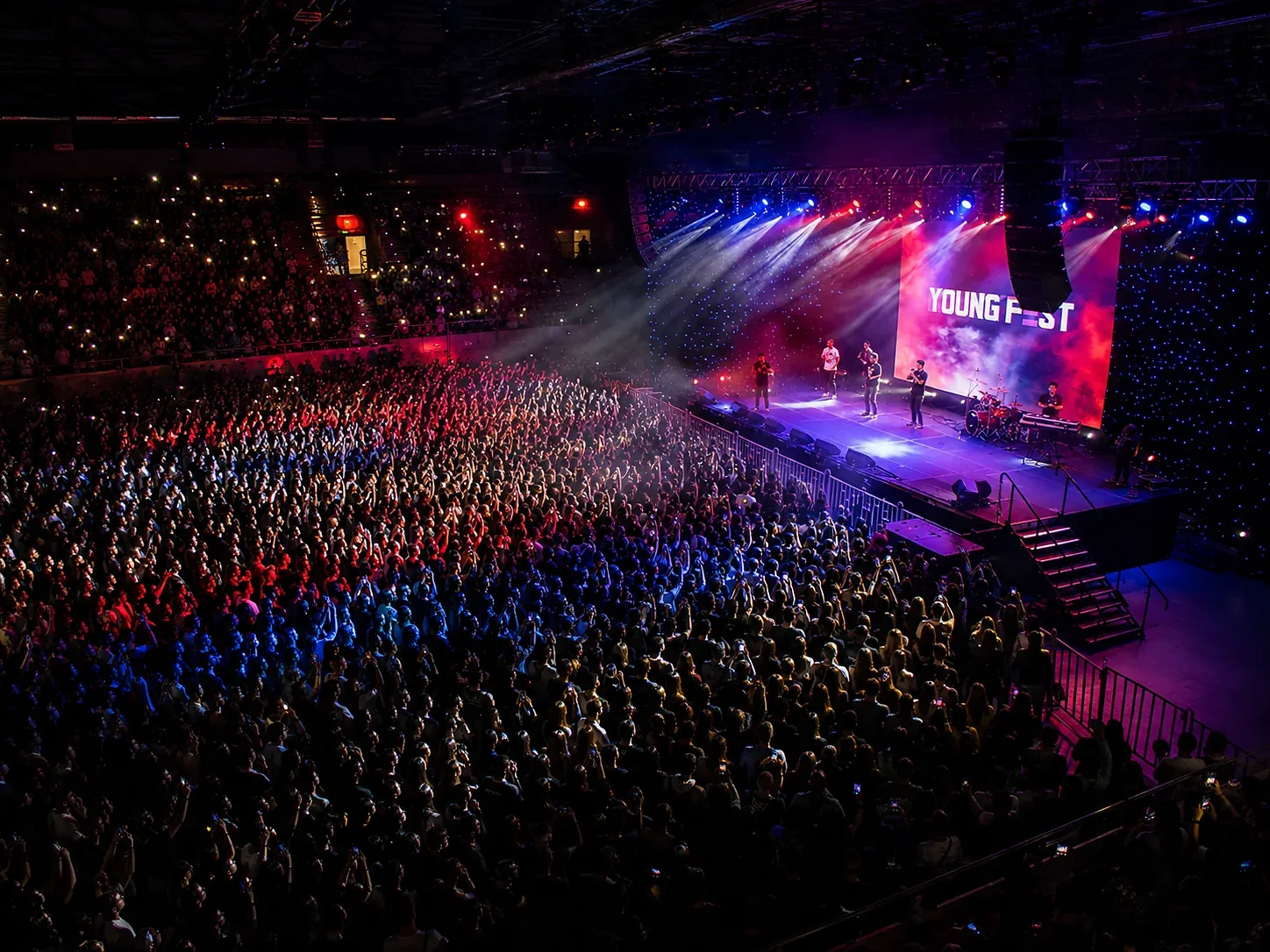
Multiple artists, dense show flow, backline, changeovers and live programme control.
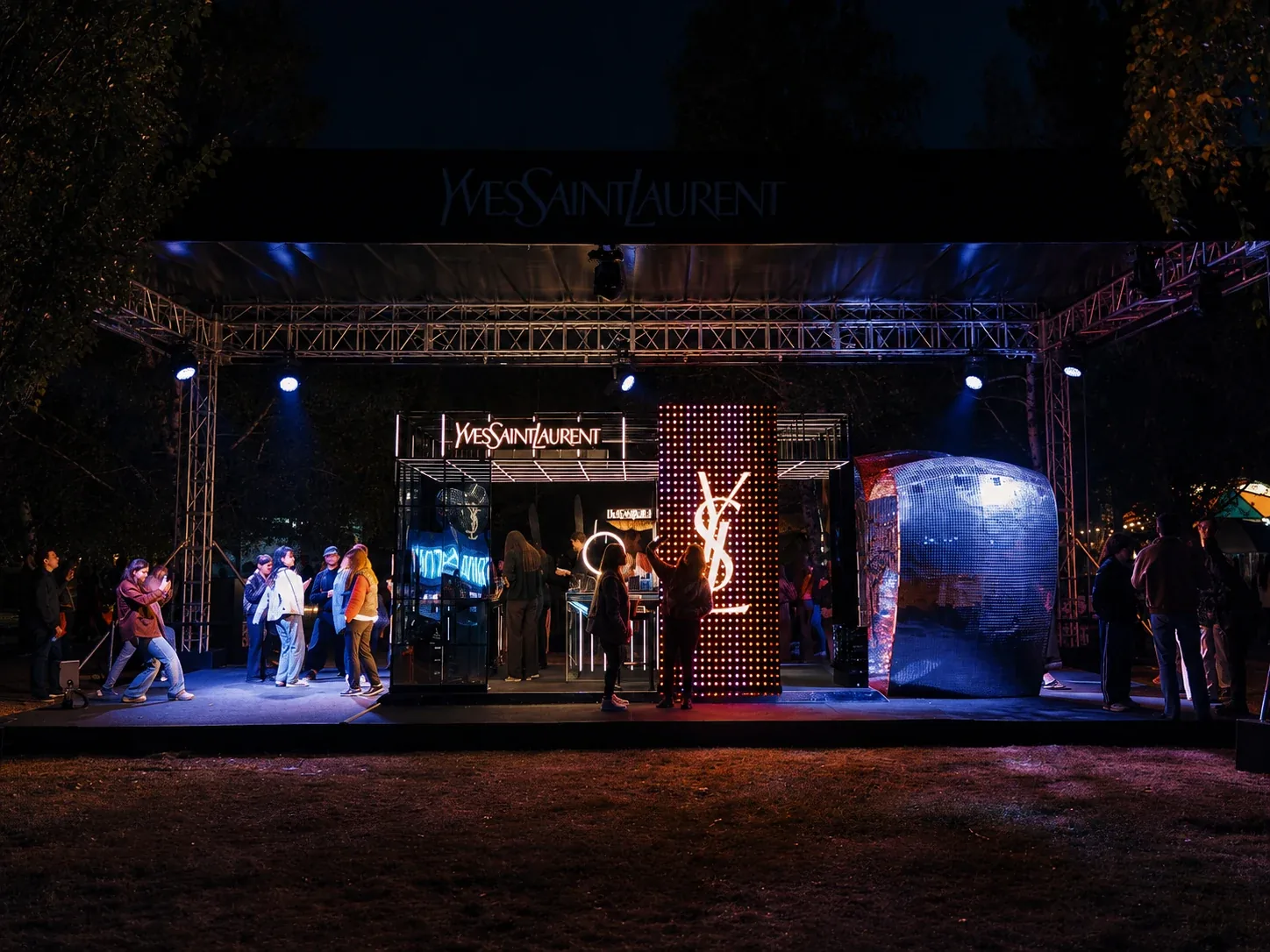
Music, food, partner zones, daytime content and an evening concert programme.
FESTIVAL EXPERIENCE MAP
A strong festival is more than a stage. It is also about arrival, orientation, time spent across zones and how people feel after sunset.
Navigation, entry groups, welcome content and flow distribution shape the first impression and reduce friction at the start.
The main stage, FOH, coverage, delay lines and visual content must work together for emotion and audience comfort.
Brand activations, gastronomy and lounge zones need ambient sound, power, decorative light and clear visitor routes.
After sunset, architectural light, safe routes, backup power and fast inter-department communication become critical.
SITE PRODUCTION SYSTEM
We design the connections between stages, visitors, teams and infrastructure—not isolated equipment positions.
Main and secondary stages, roofs, rigging, decks, FOH and backstage.
Main PA, front fill, out fill, delay lines and off-site level control.
Concert lighting, site lighting, entrances, brand zones and safe routes.
Main screens, side screens, IMAG, schedule and wayfinding content.
Generators, load distribution, cable routes, protection and backup.
Intercom, radios, contact sheet, stage managers and decision procedures.
FESTIVAL FORMATS
System scope depends on territory, stage count, duration and local infrastructure—not audience alone.
City square, park or public space.
Music, food, partner and brand zones.
Several stages, long programme and complex logistics.
INTERACTIVE PLANNER
Enter site parameters to receive a preliminary profile, zone map, crew, power strategy and key checks.
FESTIVAL READINESS CONTROL
The interactive check highlights unresolved infrastructure, weather, programme and crew questions before load-in day.
SITE COMMAND
Stage, technical and site teams share one schedule, communication plan and decision structure.
Technical directoroverall architecture, priorities and critical decisions
Stage managersprogramme, artists, soundchecks and changeovers
Site operationsaccess, routes, power, infrastructure and vendors
Safety & weatherwind, rain, emergency scenarios and stop-work procedure
PRODUCTION DOCUMENTS
Before load-in we lock not just equipment, but the relationships between every zone and team.
Stages, FOH, delay, backstage, power, entrances and technical routes.
Dimensions, rigging, loads, ballast, barricade and risers.
Main arrays, fills, delay zones and noise-boundary control.
Generators, loads, distro, cable routes and backup.
Access, setup, checks, programme, shifts and dismantling.
Artists, models, substitutions, input lists, backline and changeovers.
Contact sheet, radio channels, intercom and escalation procedure.
Thresholds, protection, stop-work and show recovery.
FESTIVAL ARCHITECTURE
Every layer affects the others: stage design shapes flows and power; programme shapes crew and schedule; territory shapes coverage and communications.
PA and delay lines are modelled around site geometry, terrain and audience density.
Every zone receives a verified load, route and backup strategy.
Public, artist and technical routes must not cross at critical points.
Wind, rain and stop-work decisions follow a pre-agreed procedure.
DAY-TO-NIGHT RHYTHM
An open-air site lives in different modes: from daytime welcome to the evening peak. The technical system must adapt to each time-of-day scenario.
Stage build, power distribution, cable routes, FOH, delay zones and basic navigation.
Entry groups, daytime content, ambient zones, early activities and comfortable visitor logistics.
Audience growth, stronger visual dramaturgy and transition into the evening show mode.
Peak audience load, audio, lighting, LED, intercom traffic and coordination across all departments.
End of program, safe audience exit, zone shutdown and preparation for the next cycle.
REAL SOUND PROJECTS
Projects where site scale, audience experience and exact coordination across many teams matter.
PROCESS
Each phase closes specific risks before equipment arrives on site.
Format, audience, site map, programme, restrictions and timing.
Terrain, access, power, noise boundaries, communications and safe routes.
Stages, coverage, LED, lighting, power, crew and production schedule.
Riders, content, vendors, contact sheet, weather and emergency plan.
Load-in, preflight, show, communications, changeovers and close-out.
FAQ
What to consider before estimating an open-air project.
Stages and rigging, concert audio and delay zones, lighting, LED and cameras, power, backstage, communications, special effects, setup, technical crew and live control.
Yes. Each stage receives its own technical system, while all stages share one production schedule, rider matrix, communications plan and command center.
We account for site geometry, terrain, audience density, stage orientation, noise limits and the need for delay lines.
A weather protocol is prepared before load-in: equipment protection, wind thresholds, responsible persons, stop-work procedure and show-recovery plan.
A zone-by-zone power schedule defines generators and distribution, separates audio, lighting and video loads and includes backup.
Yes. We check models and substitutions, stage plots, input lists, backline, monitoring, soundchecks and changeovers.
Yes. Cameras, IMAG, video switching, recording and streaming are integrated into the overall signal and network architecture.
It depends on stage count, structures, zones, cable routes and site access. Large projects often require a dedicated multi-day load-in.
Pricing depends on territory, audience, stage and day count, systems, rigging, power, crew, logistics, weather exposure and redundancy.
Date, location, site map, expected audience, stage and zone count, programme, riders, available setup window and site restrictions.
Send the site map, date, audience, stage count and programme.
Receive a preliminary architecture for stages, audio coverage, LED, lighting, power, crew and site operations.